
 Call (323) 5215131
What Causes a Circuit Breaker to Stop Resetting in a Los Angeles Home
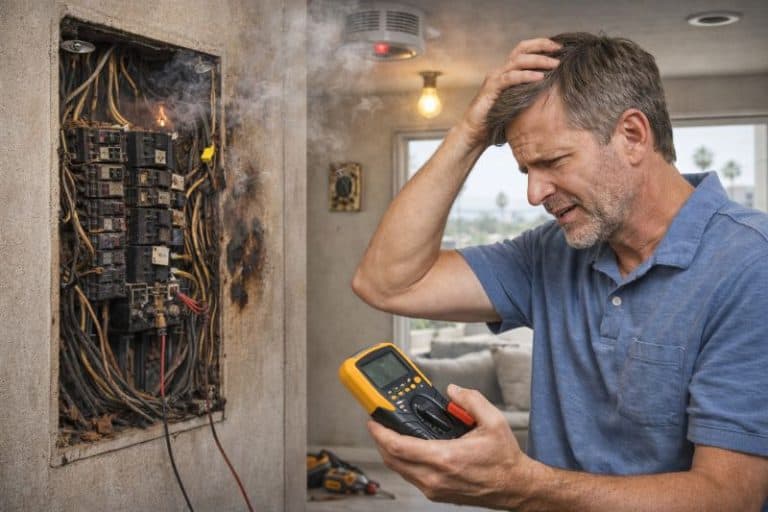
You flip the breaker back to the on position and it immediately kicks back off, or it won’t move at all. Maybe it’s been tripping repeatedly and now it simply won’t reset. This is one of the most common electrical calls RG Electric receives from homeowners across Los Angeles, and it’s also one of the most misunderstood. As a licensed C10 electrical contractor, License #910807, we’ve diagnosed this situation hundreds of times, and the cause is almost never what the homeowner assumed when they called. Understanding what’s actually happening inside that panel is the first step toward resolving it safely.
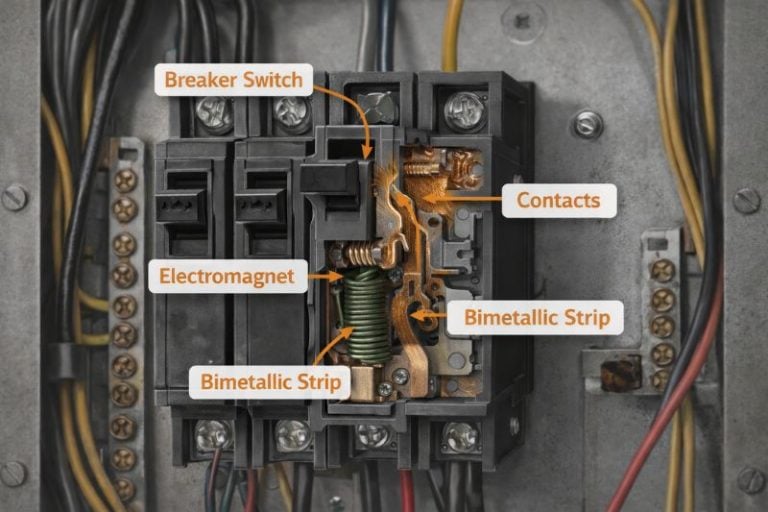
What a Circuit Breaker Is Actually Doing
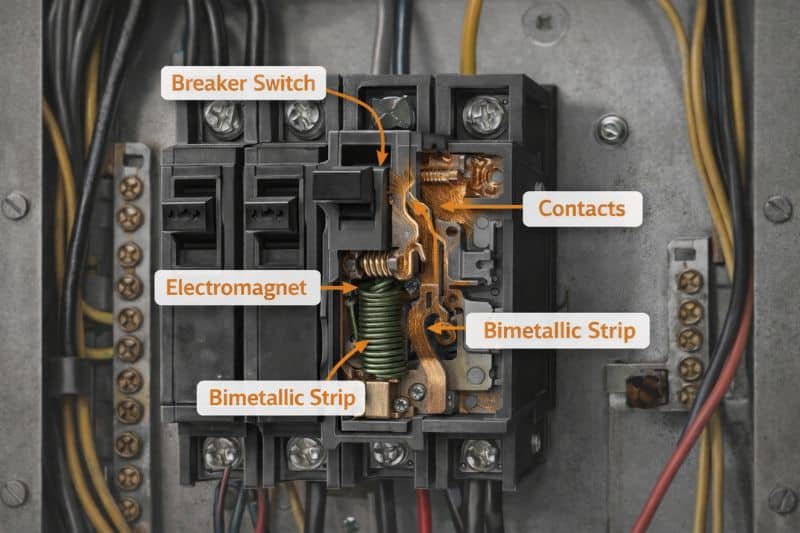
A circuit breaker has one job: to interrupt the flow of electricity when something on the circuit creates a condition that could cause damage or start a fire. When a breaker trips, it’s doing its job correctly. The problem isn’t the breaker. The problem is whatever condition triggered it.
When a breaker won’t reset after tripping, it’s usually because that condition hasn’t been resolved. The breaker is still sensing a fault, an overload, or a short, and it’s refusing to restore power to a circuit that it’s detecting as unsafe. That’s not a malfunction. That’s the protection system working as intended.
The exceptions are a breaker that has worn out mechanically and a panel whose design is so flawed that its breakers can’t be trusted to behave predictably at all. Both of those situations require professional attention for different reasons, and we’ll cover both below.
The Four Reasons a Breaker Won’t Reset
A Sustained Overload on the Circuit
The most common cause of a breaker that trips and won’t reset is a circuit that is still overloaded. If the devices or appliances drawing power from that circuit collectively exceed what the circuit is rated to carry, the breaker will trip and refuse to reset until the load is reduced.
This happens frequently in older Los Angeles homes where the original wiring was designed for a fraction of the electrical load that modern households place on a circuit. A kitchen circuit rated for 15 or 20 amps that’s feeding a microwave, a coffee maker, a toaster oven, and a refrigerator simultaneously is running at or beyond its limit. The breaker is doing exactly what it should.
The fix in these cases isn’t forcing the breaker to reset. It’s identifying what’s overloading the circuit, reducing the load, waiting a few minutes for the breaker to cool down, and then resetting. If the circuit continues to trip under normal usage, the circuit itself may be undersized for the demand placed on it, which is a conversation about adding a dedicated circuit or upgrading the panel’s capacity.
A Short Circuit
A short circuit occurs when a hot wire makes direct contact with a neutral wire, a ground wire, or another conductor it shouldn’t be touching. The result is a sudden surge of current that trips the breaker immediately and hard. A breaker that has responded to a short circuit will often feel warm and may resist resetting even after the circuit is unloaded.
Short circuits in Los Angeles homes most commonly occur inside outlets and switches where connections have worked loose over time, inside appliance cords that have been damaged, or within walls where wiring has deteriorated or been disturbed by renovation work. Unlike an overload, a short circuit doesn’t resolve by waiting. The fault has to be located and corrected before the circuit can safely carry power again.
Forcing a breaker to reset after a short circuit without finding and correcting the fault is one of the more dangerous things a homeowner can do. The short still exists, and restoring power to it creates an immediate arcing and fire risk.
A Ground Fault
A ground fault is similar to a short circuit but involves current flowing along an unintended path to ground rather than between conductors. Ground faults are particularly common in areas where moisture is present, which is why code requires GFCI protection in bathrooms, kitchens, outdoor outlets, and anywhere near water sources. In Los Angeles, where older homes often have unprotected outdoor outlets and bathrooms that were last updated decades ago, ground faults are among the most frequently diagnosed causes of breakers that refuse to reset.
A GFCI outlet that has tripped can sometimes be confused with a breaker problem, because it cuts power to everything downstream of it on the circuit. Before assuming the breaker is the issue, check whether a GFCI outlet somewhere on the same circuit has tripped and needs to be reset at the outlet itself rather than at the panel. In many homes, the GFCI outlet that controls a bathroom or kitchen circuit is located in a different room entirely, which is a source of significant confusion for homeowners who can’t find where the power was cut.
When a ground fault has triggered the breaker rather than a GFCI, the fault is more serious. It means current is finding a path to ground somewhere in the circuit that bypasses the protection that should have caught it first. That condition needs to be located and corrected by a licensed electrician before the circuit is restored.
A Failed Breaker
Breakers are mechanical devices and they wear out. A breaker that has cycled through enough trips and resets over its service life can lose the ability to hold its position reliably. It may trip under loads well below its rating, fail to reset at all, or reset but trip again almost immediately without an obvious cause on the circuit.
A genuinely failed breaker in an otherwise sound panel can be replaced individually. The panel brand matters here significantly. In a modern, code-compliant panel from a reputable manufacturer, a single failed breaker is a straightforward replacement. In one of the recalled panel brands we’ll cover below, there is no safe repair path, and replacement of the individual breaker doesn’t resolve the underlying hazard.
When the Panel Brand Is the Real Problem
Four panel brands appear repeatedly in Los Angeles homes and apartment buildings, and all four have the same answer when a breaker stops resetting: the panel needs to come out.
Zinsco panels have bus bar designs that are prone to overheating and breakers that can fuse to the bus bar, making them impossible to remove or replace safely. A Zinsco breaker that won’t reset may have physically bonded to a bus bar that is already damaged.
Federal Pacific Electric panels, known as FPE or Stab-Lok, have a well-documented history of breakers that fail to trip under overload conditions. Paradoxically, these breakers can also fail to reset after tripping, leaving homeowners without power to a circuit and no safe way to restore it without addressing the panel itself.
Challenger and Pushmatic panels carry similar failure histories. Breaker mechanisms that have degraded over decades of use, bus connections that no longer make reliable contact, and designs that don’t meet current safety standards are consistent findings across all four brands.
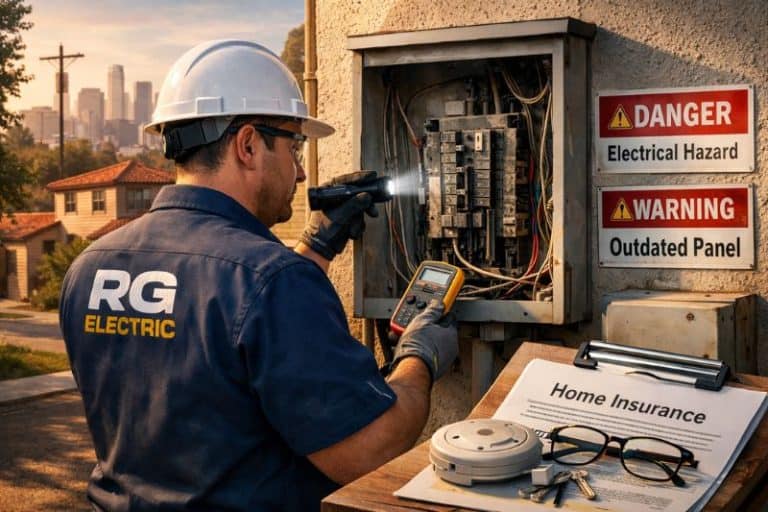
If you have one of these panels and a breaker has stopped resetting, the breaker isn’t the problem you need to solve. The panel is. Insurance companies in Los Angeles are increasingly refusing coverage on properties with these panels installed, regardless of whether they appear to be functioning. Our circuit breaker services in Los Angeles include a full evaluation of the panel condition alongside any breaker assessment, so you have an accurate picture of what you’re actually dealing with.
What Not to Do When a Breaker Won’t Reset
A few things homeowners commonly try that make the situation worse rather than better.
Don’t force the breaker repeatedly. If a breaker won’t reset after one or two attempts, forcing it isn’t going to work and risks damaging the breaker mechanism further. More importantly, the reason it won’t reset is still present, and repeated forcing doesn’t change that.
Don’t assume unplugging devices resolves a short circuit. Removing load from a circuit that has experienced a short circuit reduces the current draw but doesn’t correct the fault. The short exists in the wiring or a device, and restoring power to it after unplugging other items doesn’t make the circuit safe.
Don’t bypass the breaker. This should go without saying, but any attempt to restore power by bypassing the protection the breaker provides is a fire hazard and a code violation. The breaker is refusing to reset because something is wrong. Bypassing it removes the only thing standing between that fault and a potential fire.
Don’t ignore a breaker that smells like burning or feels hot to the touch. These are signs of arcing or overheating inside the panel. At that point the appropriate response is to leave the breaker in the tripped position and call a licensed electrician. This is not a wait-and-see situation.
The Right Process for a Breaker That Won’t Reset
The process that actually resolves the problem follows a logical sequence. First, reduce the load on the circuit by unplugging or turning off devices. Wait a few minutes for the breaker to cool. Attempt to reset it by moving it fully to the off position before moving it back to on. If it holds, the problem was a temporary overload. Monitor the circuit going forward for signs of recurring trips.
If the breaker trips again immediately or within a short period under normal load, or if it won’t reset at all after the load has been reduced, a short circuit, ground fault, or failed breaker is the likely cause. At that point the diagnostic needs to be done by someone who can safely access the circuit and trace the fault.
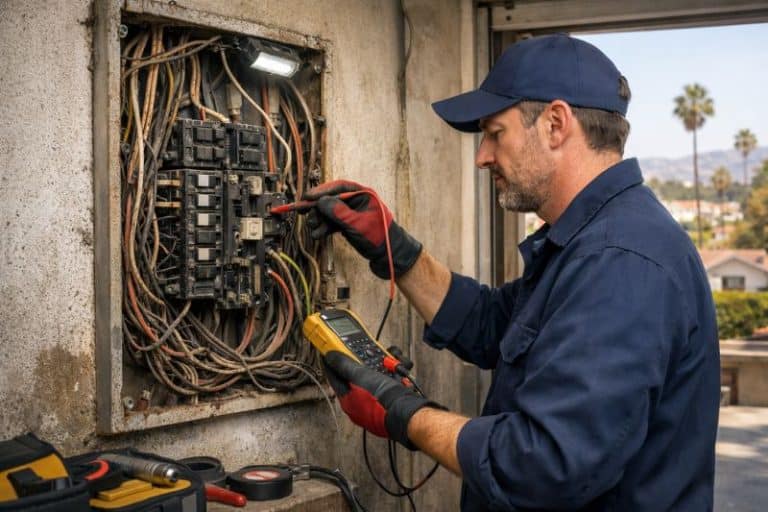
RG Electric’s process starts with a service call. A technician arrives, identifies the fault, reports findings to Roy, and we develop a clear estimate before any work begins. There are no hidden fees and no work starts without your approval. Our electrical repair services in Los Angeles cover everything from isolated circuit faults to situations where the breaker problem is pointing to something more significant in the panel or wiring behind it.
When the Breaker Problem Points to a Panel Upgrade
A single breaker that has stopped resetting is sometimes the first visible symptom of a panel that has reached the end of its useful life. This is particularly true in homes built before 1980 in neighborhoods like Van Nuys, North Hollywood, Encino, and Burbank, where panels installed during original construction have been carrying increasing loads for decades without being upgraded. The same pattern shows up in parts of the Westside, the San Gabriel Valley, and throughout the older residential stock of central Los Angeles, where homes that were built for the electrical demands of the 1950s and 60s are now running modern HVAC systems, EV chargers, and home offices on wiring that was never designed for that load.
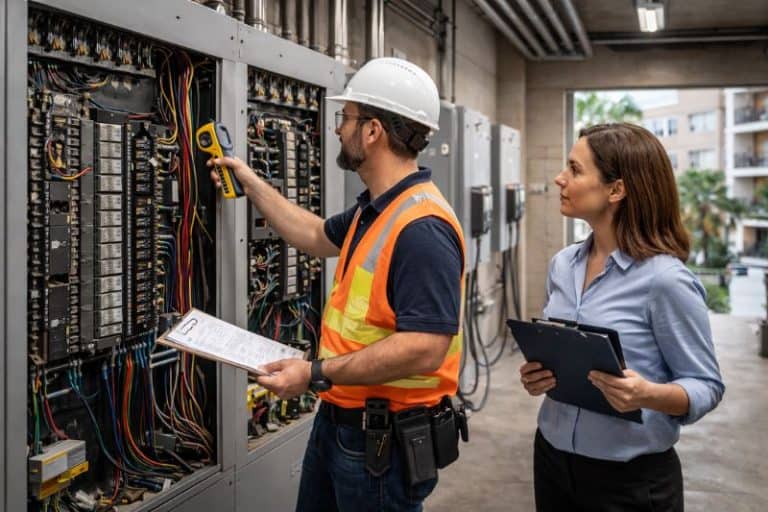
Signs that the breaker problem is pointing to a larger panel conversation include multiple breakers showing similar issues around the same time, a panel that feels warm on the exterior, visible corrosion or discoloration inside the panel cover, or a panel that is full with no room for additional circuits. Any of these conditions, combined with a breaker that won’t reset, warrants a full panel evaluation alongside the circuit repair.
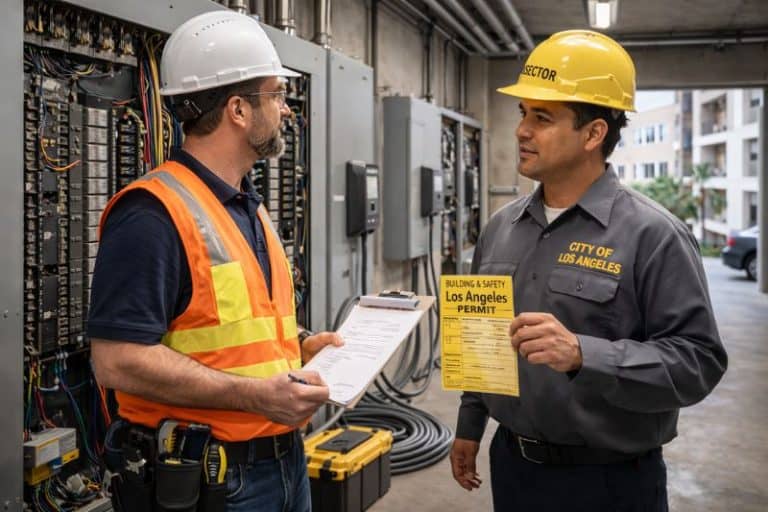
We stand behind our work for twelve months and we follow code to the teeth. When RG Electric evaluates a breaker problem in a Los Angeles home, we’re giving you an accurate picture of what the circuit and the panel actually need, not just what will get the lights back on temporarily. Our electrical panel services in Los Angeles handle everything from individual panel assessments to full replacements with permits and city inspection.
For immediate assistance or to schedule a professional evaluation, call RG Electric directly at (323) 521-5131.