
 Call (323) 5215131
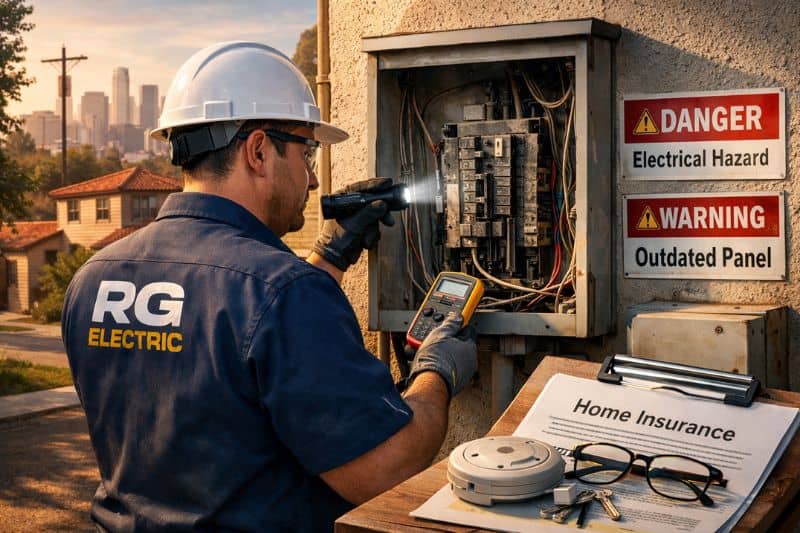
What Electrical Upgrades Do Insurance Companies Require in California?
If you manage a multi-unit building or own an older home in Los Angeles, there is a good chance your insurance carrier has already sent a letter, or will send one soon. Across California, property insurance companies are tightening their electrical requirements, and properties that cannot demonstrate code-compliant electrical systems are facing non-renewals, coverage restrictions, and premium surcharges that were unheard of five years ago. RG Electric, a licensed C10 electrical contractor serving Los Angeles under License #910807, works with property managers and homeowners every month who are navigating exactly this situation. This post answers the question directly: what electrical upgrades do insurance companies actually require in California, and what happens if you do not address them before your renewal deadline arrives.
Why California Insurers Are Escalating Electrical Requirements Right Now
The shift has been building for several years, but the pace accelerated sharply following major California wildfire events. Insurance carriers took enormous losses, and their response has been to scrutinize the risk profiles of individual properties far more aggressively than they once did. Electrical systems are a primary focus because faulty or outdated wiring is one of the leading causes of structure fires, and fire risk is exactly what insurers are trying to price or eliminate from their portfolios.
In Los Angeles specifically, the housing stock is old. A significant portion of the city’s residential and multi-unit buildings were constructed before modern electrical codes existed. That means panels that were installed decades ago and have never been replaced, wiring that predates grounding requirements, and circuit protection that would not pass a current inspection. Insurers know this, and their underwriters are now asking questions they did not ask ten years ago.
The consequence is straightforward. Properties that cannot demonstrate electrical compliance are either declined for coverage, renewed at significantly higher premiums, or issued conditional renewals that require documented upgrades within a fixed window, often 30 to 90 days. For property managers with multiple buildings, a single non-renewal can trigger a cascade of reviews across a portfolio. The time to address electrical deficiencies is before that letter arrives, not after.
The Four Recalled Panel Brands That Trigger Immediate Insurance Action
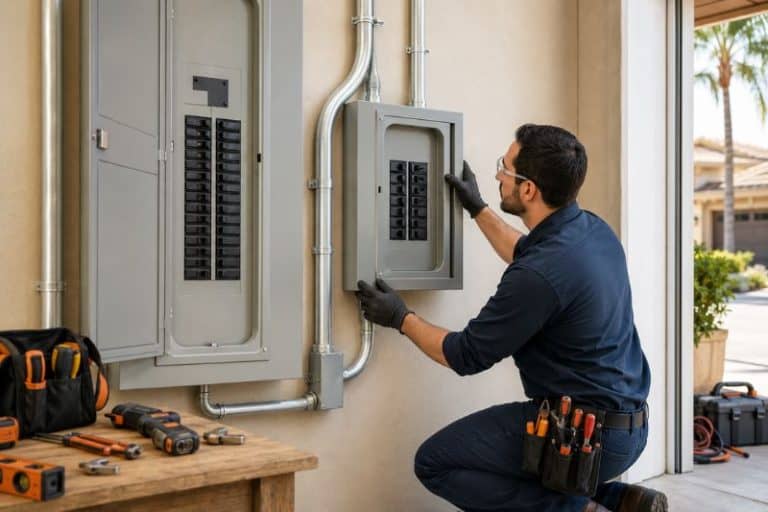
The single most common trigger for insurance-mandated electrical upgrades in California is the presence of a recalled or known-defective electrical panel. Four panel brands appear on insurer watch lists consistently, and a property with any of them faces an almost certain requirement to complete an electrical panel upgrade in Los Angeles before coverage will be issued or renewed.
Zinsco Panels
Zinsco panels, also sold under the Sylvania brand, were manufactured primarily between the 1950s and 1970s. The core defect is a design that allows breakers to fuse to the bus bar over time, which means the breaker can no longer trip properly when a fault occurs. A breaker that does not trip allows current to continue flowing through an overloaded or faulted circuit, which generates heat and creates a fire hazard. The panel may appear to be functioning normally while this condition exists, which is exactly why insurers treat it as an unacceptable risk regardless of whether the homeowner has experienced problems.
Federal Pacific Electric Panels
Federal Pacific Electric panels, commonly called FPE or Stab-Lok panels, were widely installed in homes built between the 1950s and 1980s. Independent testing has documented a failure rate for FPE breakers that is significantly higher than acceptable standards. Like Zinsco, the danger is a breaker that does not trip under fault conditions. Many California homes still have these panels, and their presence is one of the first things an insurance inspector flags.
Challenger Panels
Challenger panels were manufactured in the 1980s and 1990s and are associated with breaker failures that can result in overheating and arcing. Several models were subject to recalls, though the brand’s issues were not as comprehensively documented as FPE or Zinsco. Insurers treat Challenger panels as a material risk.
Pushmatic Panels
Pushmatic panels, made by Bulldog Electric, are a different kind of problem. They do not use conventional circuit breakers but instead use push-button switches to reset circuits. Parts for these panels are no longer manufactured, which means a failed breaker cannot be properly replaced. Pushmatic panels also lack modern safety features and do not meet current code requirements. Their age alone, typically 40 to 60 years at this point, makes them a liability risk that insurers are no longer willing to carry.
If your property has any of these four panel types, the insurance requirement is not a matter of if but when. Proactive replacement before your carrier identifies the issue gives you control over the timeline and the contractor selection. Waiting until a renewal notice arrives means working under pressure, often with a 30-day deadline, which limits your options and increases costs.
GFCI Protection Requirements That Insurers and Code Inspectors Both Flag
Ground fault circuit interrupter protection is required by the National Electrical Code in specific locations throughout any building, and California has adopted and expanded those requirements through Title 24 and local amendments. GFCI protection is not optional in the locations where code requires it, and an electrical inspection for insurance purposes will identify missing GFCI protection as a deficiency.
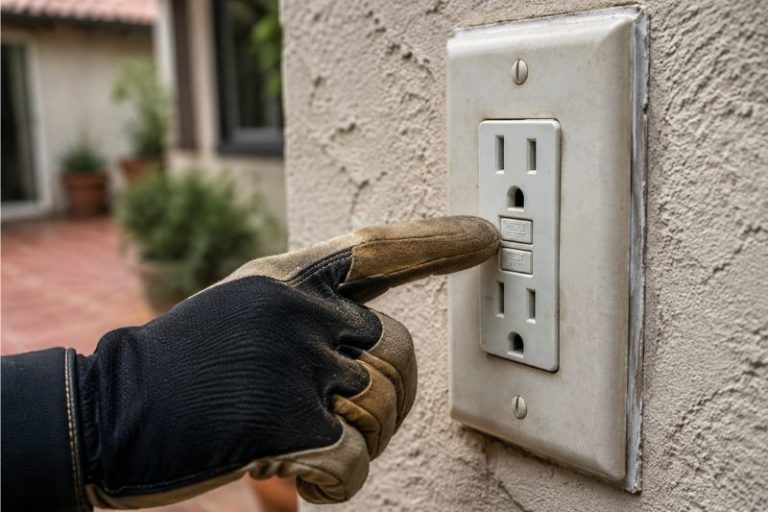
The locations where GFCI protection is required include all bathroom outlets, kitchen outlets within six feet of a sink, all outdoor outlets, garage outlets, outlets in unfinished basements and crawlspaces, outlets near swimming pools, hot tubs, and fountains, and any outlet within six feet of a laundry sink. In multi-unit buildings, common area outlets, outdoor lighting circuits, and laundry room outlets are all subject to GFCI requirements.
The reason GFCI protection matters to insurers is the same reason it matters to code: a ground fault in a location where water is present creates an electrocution hazard. GFCI devices monitor the current flowing through a circuit and trip in milliseconds when they detect an imbalance that indicates current is flowing through an unintended path, such as through a person. Without this protection, a wet outlet in a kitchen or bathroom can deliver a potentially fatal shock.
For older buildings, GFCI protection is frequently missing from locations where it is now required because the original installation predated the code requirement. This is one of the most common findings during an insurance inspection of a pre-1980 property, and it is also one of the more straightforward upgrades to address. The work involves replacing standard outlets with GFCI outlets or installing GFCI breakers that protect an entire circuit, along with any necessary wiring corrections to make the installation code-compliant.
Grounding Deficiencies and What They Mean for Coverage
Electrical grounding is a safety system that provides a low-resistance path for fault current to return to the source, which allows the breaker to trip and clear the fault rather than allowing current to flow through equipment, building materials, or people. Older homes and buildings were frequently wired with two-wire systems that include a hot conductor and a neutral conductor but no ground wire. Modern code requires three-wire systems with a dedicated ground conductor in virtually all circuits.
An ungrounded electrical system creates two categories of risk that insurers care about. First, without a proper ground path, fault current has nowhere to go except through whatever path presents itself, which increases the risk of electrical fires and equipment damage. Second, ungrounded circuits do not support the operation of GFCI devices in the way grounded circuits do, which means the absence of grounding compounds the GFCI deficiency problem.
Insurance underwriters increasingly require evidence of a properly grounded electrical system, particularly for older properties seeking coverage at replacement cost value. Properties with documented grounding deficiencies may be declined for certain coverage types or required to upgrade before full coverage is available. The remediation ranges from adding ground wires to specific circuits all the way to a full rewire, depending on the extent of the deficiency and what the rest of the electrical system looks like once it is opened up for inspection.
Wiring Age and Condition: When Insurance Triggers a Full Rewire Requirement
Not every insurance-mandated electrical upgrade involves a panel replacement or GFCI installation. For some properties, particularly those built before 1960, the wiring itself is the primary concern. Insurers look at wiring type, age, and condition when evaluating a property, and certain wiring types carry risk profiles that result in coverage requirements or outright declines.
Knob and Tube Wiring
Knob and tube wiring, which was standard from roughly the 1880s through the 1940s, consists of individual conductors run through ceramic knobs and tubes without a protective sheath. It has no ground wire, it was not designed for the electrical loads modern households place on circuits, and its insulation degrades significantly over time. Many California insurers will not write a policy on a home with active knob and tube wiring, and others require it to be replaced as a condition of coverage. The presence of knob and tube is a near-automatic flag for insurers in California today.
Aluminum Branch Circuit Wiring
Aluminum branch circuit wiring, installed in many homes built between the mid-1960s and early 1970s, carries a different risk. Aluminum expands and contracts at a different rate than the copper devices it connects to, which can cause connections to loosen over time. Loose connections generate heat, and sustained heat at a connection point is a fire hazard. A property with aluminum branch circuit wiring that has not been addressed with approved connection methods or replacement wiring will often receive an insurance flag, particularly in California where fire risk is a primary underwriting consideration.
Cloth-Insulated Wiring
Cloth-insulated wiring from the 1940s through the 1960s degrades predictably over time. The insulation dries out, becomes brittle, and can crack or crumble, exposing conductors. When conductors are exposed inside walls or junction boxes, the risk of arcing and fire increases substantially. An insurer who receives an inspection report noting degraded cloth insulation on original wiring will typically require remediation before coverage is written or renewed.
The scope of the response to a wiring deficiency depends on what the inspection finds. In some cases, problem areas can be addressed without a full rewire. In others, particularly where the wiring throughout the building is the same age and type, a full rewire is the only approach that produces a clean inspection result and satisfies the insurer’s requirements.
What Documentation Insurance Companies Request Before Issuing or Renewing Coverage
Insurance underwriters do not simply take a property owner’s word that electrical work has been done. When a policy application or renewal involves electrical upgrades, the documentation requirements are specific, and incomplete documentation can result in the same outcome as no documentation at all.
The Standard Documentation Package
The standard documentation package for insurance-mandated electrical work includes the permit pulled for the work, the inspection record from the city or county showing the work passed inspection, and the contractor’s documentation including their license number and certificate of insurance. In California, electrical work that requires a permit must be inspected by a city or county inspector before the permit is closed, and the closed permit record is what demonstrates to an insurer that the work was done correctly and to code.
For commercial and multi-unit properties, insurers frequently also request a certificate of insurance from the electrical contractor who performed the work. This protects the property owner from liability if a defect in the contractor’s work causes a loss after the policy is issued. A licensed, bonded, and insured contractor can provide this documentation as a matter of course. An unlicensed handyman cannot.
When Prior Work Was Done Without Permits
Property managers who have had electrical work done in the past by contractors who did not pull permits are in a difficult position at renewal time. The work may have been done, but without a closed permit and inspection record, it cannot be documented in the way insurers require. In some cases, the only path forward is to have a licensed contractor inspect the work and either confirm it is code-compliant and obtain retroactive documentation, or identify what needs to be corrected and pull a permit for the corrections.
Maintaining a complete electrical documentation file for each property, including permit records, inspection reports, contractor invoices with license numbers, and certificates of insurance, is a practice that pays dividends at every renewal cycle. Underwriters who receive complete documentation process renewals faster and with fewer conditions than those who have to request documentation that does not readily exist.
How to Get Ahead of the Deadline Before Your Insurer Contacts You
The most expensive and stressful version of an insurance-mandated electrical upgrade is one that happens under a 30-day deadline. When an insurer issues a notice of non-renewal or a conditional renewal with a short compliance window, the property owner loses control of the situation. Contractor availability, permit timelines, and inspection scheduling do not compress to fit an insurance carrier’s deadline. The result is either paying a premium to accelerate work, or facing a gap in coverage while the work is completed.
The practical alternative is to assess the electrical condition of your property before the insurer does. If your buildings have panels from the 1960s, 1970s, or 1980s that have never been replaced, the probability that one or more of them is on an insurer watch list is high. If your buildings were constructed before 1980 and have never had a professional electrical evaluation, the likelihood of GFCI deficiencies, grounding issues, or wiring concerns that will interest an underwriter is also high.
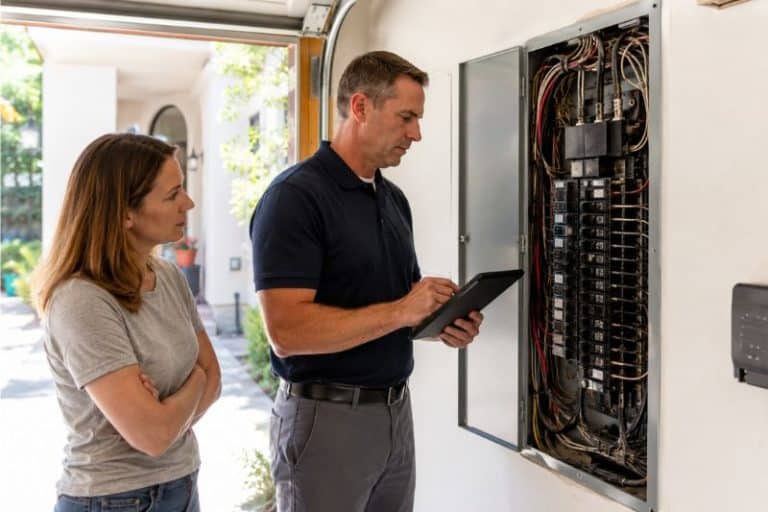
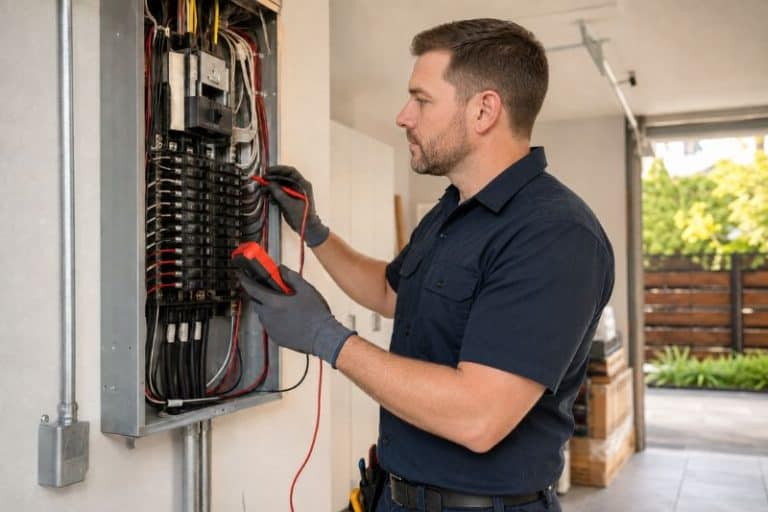
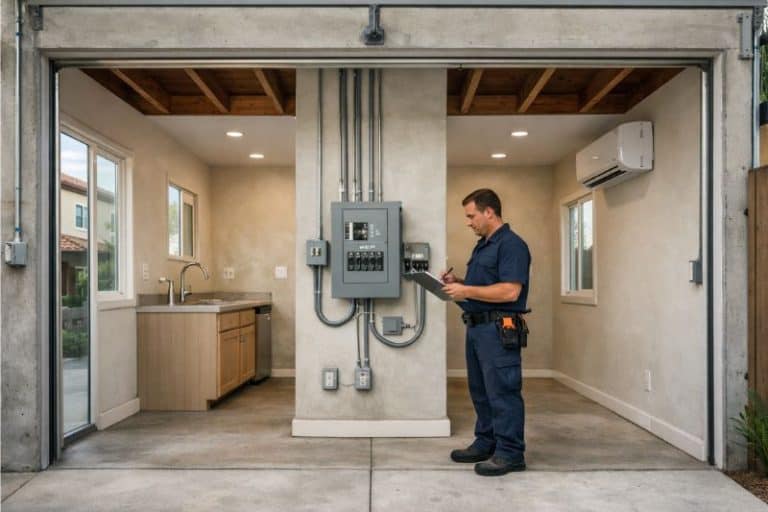
A professional electrical evaluation by a licensed C10 contractor produces an honest inventory of what the building has, what code requires, and what an insurer is likely to flag. That inventory gives you the information you need to prioritize upgrades, budget for them in advance, and complete them on a schedule that does not involve emergency timelines. It also gives you documentation of the evaluation itself, which some insurers treat favorably as evidence of proactive risk management.
For property managers working across a portfolio, triage matters. Buildings with known recalled panel types and older wiring should be prioritized. Buildings with more recent electrical work and no known deficiencies can operate on a standard inspection cycle. The goal is to ensure that no building in the portfolio is a surprise at renewal time.
How RG Electric Handles the Full Insurance Compliance Process
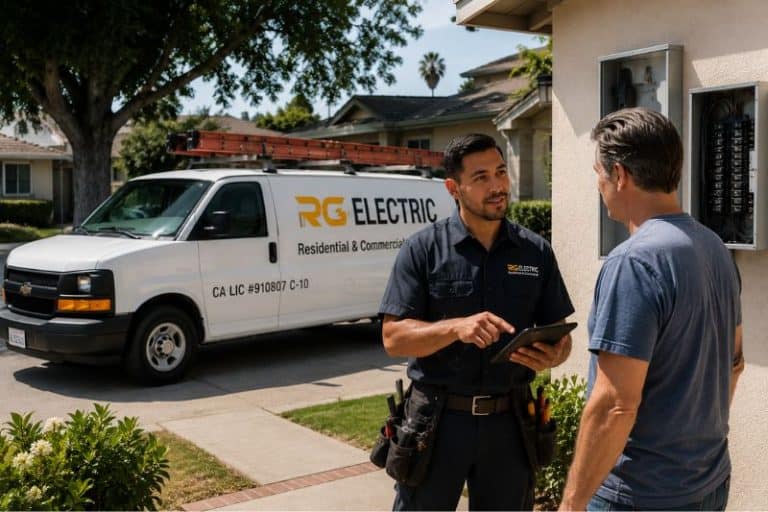
RG Electric works with property managers and homeowners throughout Los Angeles on insurance-driven electrical upgrades, from the initial evaluation through the closed permit and final documentation package. As a commercial electrician in Los Angeles licensed under C10 #910807, we pull all required permits, coordinate city inspections, and provide the documentation that insurers require, including our certificate of insurance for every commercial project.
Our work on insurance-related projects follows the same process as all of our work: a site evaluation to understand what is present and what needs to be done, a clear written estimate with no hidden charges, and execution to code with inspection-ready installations. When an inspector opens a panel or reviews a wiring installation, we want the work to stand up without qualification.
We have replaced Zinsco, Federal Pacific, Challenger, and Pushmatic panels across Los Angeles, from single-family homes in Sherman Oaks and Encino to apartment complexes in Van Nuys, Koreatown, and Downtown LA. We understand what insurance inspectors look for, what documentation needs to accompany the work, and how to communicate with property managers who need the project completed on a defined timeline with minimal disruption to tenants.
Property managers and building owners who want to understand the electrical condition of their property before their insurance carrier raises the question are welcome to contact us for a professional evaluation. We serve the full Los Angeles area including the San Fernando Valley, the Westside, South Bay, and the San Gabriel Valley. For commercial and multi-unit projects, we provide a certificate of insurance on request.
For immediate assistance or to schedule a professional evaluation, call RG Electric directly at (323) 521-5131.